
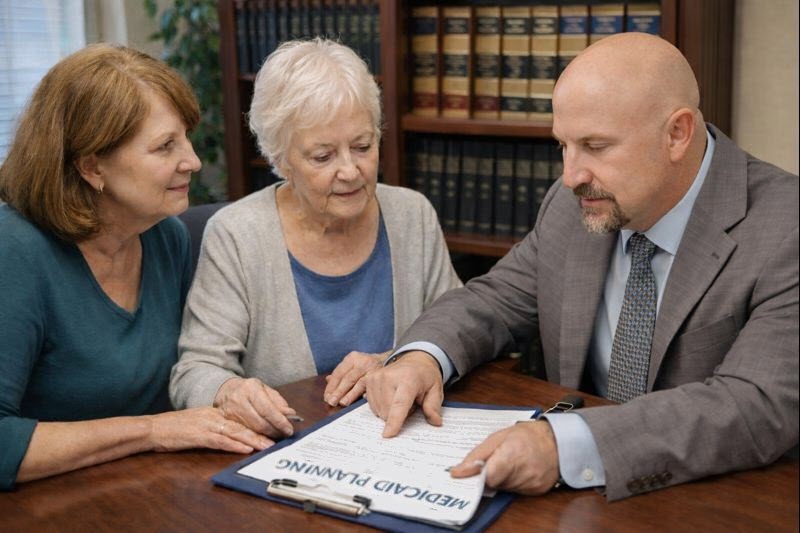
Probate can cost your family thousands of dollars, lock up assets for six months or more, and expose your estate to public record. The good news: Ohio law offers several powerful tools to transfer wealth privately and quickly, outside of court.
What Is Probate in Ohio and When Is It Required?
Probate is a court-supervised legal process that validates a deceased person’s will, appoints a personal representative (executor or administrator), settles outstanding debts and taxes, and distributes the remaining estate to heirs or beneficiaries. In Ohio, probate is handled by the Probate Division of the Court of Common Pleas in the county where the decedent resided.
Probate is required when a person dies owning assets titled solely in their name, without a beneficiary designation, joint ownership with survivorship rights, or another non-probate transfer mechanism. Common examples include a home deeded only to the decedent, a bank account without a payable-on-death designation, or personal property distributed by will alone.
Assets that pass outside of probate include jointly owned property with survivorship rights, accounts with valid beneficiary designations, assets held in a funded trust, and property transferred by a valid Transfer-on-Death designation affidavit.
Key Point: Under Ohio Revised Code § 2113.53, a standard probate estate typically cannot be closed earlier than six months after the executor’s appointment, a mandatory creditor-claims window that delays distributions to your loved ones even if no disputes arise.
Why Do Ohio Families Work to Avoid Probate?
Probate serves a legitimate function in settling disputed estates, protecting creditors, and verifying title. But for many Ohio families, the process creates three significant burdens:
Time Delays
Ohio law requires at least a six-month creditor window before an estate can close. In contested or complex estates, proceedings can extend for a year or more. During this period, heirs may be unable to access or use inherited assets.
Cost
Ohio probate courts charge filing fees, and executors are entitled to statutory compensation under O.R.C. § 2113.35. Attorney fees, appraiser fees, bond premiums, and publication costs compound quickly. Total administration costs can run 3–8% of the gross estate value.
Loss of Privacy
Probate is a matter of public record. The inventory of your assets and their appraised values, along with the names of your beneficiaries, are filed with the court and may be published.
Good News
With advance planning, most Ohio families can structure their estate so that little or nothing passes through probate.
Revocable Living Trust: The Most Comprehensive Tool
A revocable living trust is the most robust probate-avoidance strategy available. You create the trust during your lifetime, name yourself as trustee, and retain control while alive. Upon death, assets transfer to beneficiaries outside of probate.
How It Works
You sign the trust, fund it by transferring assets into it, and continue using those assets normally. After death, a successor trustee distributes assets without court involvement.
The Critical Requirement: Funding the Trust
Assets must be retitled into the trust. Failure to do so means they may still go through probate.
Advantages include avoiding probate, privacy, incapacity planning, and flexible distribution structures. Considerations include upfront cost, maintenance, and no tax advantage during life.
Transfer-on-Death Designation Affidavit for Real Estate
Ohio allows real estate to pass outside probate through a Transfer-on-Death Designation Affidavit.
Key requirements include signing, notarization, recording before death, and including the legal property description. The owner retains full control during life.
Important: Medicaid estate recovery and divorce can affect TOD designations.
Payable-on-Death (POD) and Transfer-on-Death (TOD) Account Designations
Bank accounts can use POD designations. Investment accounts can use TOD registration. Vehicles can also have TOD designations.
These allow direct transfer to beneficiaries without probate.
Key Point: Review beneficiary designations regularly, especially after major life changes.
Joint Tenancy with Right of Survivorship
Property owned jointly with survivorship rights passes automatically to the surviving owner without probate.
Important: Adding a joint owner gives them immediate ownership rights and may create legal or tax issues.
Beneficiary Designations on Life Insurance & Retirement Accounts
Assets like life insurance, IRAs, and 401(k)s pass directly to named beneficiaries, regardless of what a will says.
Common mistakes include naming the estate, failing to update beneficiaries, or naming minors improperly.
Ohio’s Small Estate Procedures
Ohio allows simplified probate for smaller estates:
- Up to $100,000 for surviving spouses
- Up to $35,000 for other heirs
This reduces cost and time but still involves court involvement.
Side-by-Side Comparison of Probate-Avoidance Tools
- Revocable Living Trust: covers real estate and finances, avoids probate, provides privacy and incapacity planning
- TOD Affidavit: avoids probate for real estate
- POD/TOD Accounts: avoids probate for financial assets
- Joint Tenancy: avoids probate but lacks privacy
- Beneficiary Designations: avoids probate for certain accounts
- Small Estate Procedure: simplified but still probate-based
Frequently Asked Questions
Does a will avoid probate?
No. A will must go through probate.
Can a trust reduce estate taxes?
Not by itself, but it can include tax planning provisions.
What is a pour-over will?
A will that transfers remaining assets into a trust after death.
Are all assets eligible for trusts?
No. Retirement accounts and certain benefits are handled differently.
What is the difference between probate and estate tax?
Probate is a court process. Estate tax is a tax on transferred wealth.
Contact Us Today
Estate planning is one of the most important gifts you can give your family. A well-structured plan can avoid probate, protect your assets, and provide peace of mind. Contact the team at Krugler Law today to ensure your legacy lives on.